BBC Investigation: Georgian Authorities May Have Used WWI-Era Chemical During 2024 Protests
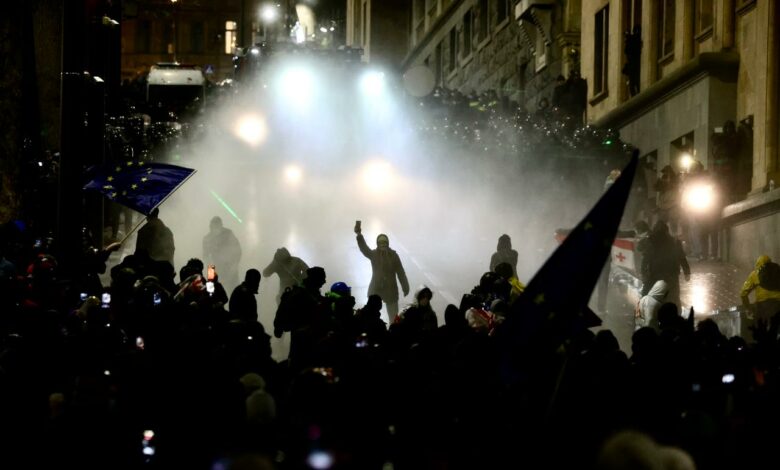
A BBC investigation suggests Georgian authorities may have used a World War I–era toxic compound against protesters during the first week of demonstrations that began on November 28, 2024.
The ruling Georgian Dream party dismissed the investigation and said it would sue the BBC.
The BBC World Service reported on December 1 that it spoke with chemical weapons experts, whistleblowers from Georgia’s riot police, and doctors, and that the evidence points to the use of an agent known as camite.
Camite, or bromobenzyl cyanide, was deployed by French forces against Germany during World War I and is believed to have been phased out in the 1930s over concerns about its long-lasting effects.
“I’ve never seen camite being utilised in modern society. Camite is markedly irritating [and] persistent with its irritation,” Professor Christopher Holstege, a world-leading toxicology and chemical weapons expert, told BBC.
“It would keep people away for a long time. They couldn’t decontaminate [themselves]. They would have to go to the hospital. They would have to leave the area. If that is indeed the case – that this chemical has been brought back – that is actually exceedingly dangerous,” he added.
Hundreds of protesters reported long-term side effects following riot police dispersals during demonstrations in the first week after November 28, when Georgian Dream announced it was pausing the country’s EU integration. Reported symptoms included headaches, fatigue, coughs, shortness of breath, and vomiting.
A former Special Tasks Department official, Lasha Shergelashvili, told the BBC that he recognized the symptoms from a product he was asked to test in 2009, describing the compound as “probably 10 times” stronger than conventional riot-control agents. “If you spill this chemical on the ground, you won’t be able to stay in that area for the next two to three days,” he said.
While civil society organizations, including the Georgian Young Lawyers’ Association, earlier pressed the Ministry of Internal Affairs to disclose what chemical compounds were mixed with water cannons and gas, allegedly to exacerbate harm, the calls went unanswered.
“The findings of the BBC investigation confirm what all of us had already felt with our own bodies,” wrote Tamta Mikeladze of the Social Justice Center.
The BBC said that Georgian Dream dismissed the investigation’s findings as “deeply frivolous” and “absurd.”
Shortly after the investigation was released, Georgian Dream said it would sue the BBC in an international court.
“It is clear that the so-called media, turned into a propaganda tool of the ‘deep state,’ has presented no facts whatsoever to substantiate such serious allegations,” Georgian Dream said in a statement posted on Facebook, adding that the investigation relied on accounts from interested parties.
“We have decided to initiate legal proceedings against fake media in international courts,” the statement said.
The ruling party also pointed to a recent controversy surrounding the BBC’s coverage of Donald Trump’s comments, which led to the resignation of the broadcaster’s director general and the news CEO.
Pro-government media seized on the same point. Imedi TV, the Georgian Dream’s main broadcaster, wrote in a social media post: “BBC – December 1: The Georgian government allegedly used a World War I-era chemical agent against protesters. November 10: The BBC’s director general and head of news resigned amid a scandal involving the editing of Donald Trump’s speech.”
Also Read:
- 03/12/2024 – Watchdog Details “Inhuman and Degrading Treatment” Against Protesters by Police
- 02/12/2024 – Public Defender: “Alarming” 80% of Detainees Report Mistreatment, Violence by Police
- 29/11/2024 – GYLA: Dispersal Unlawful, Inhumane and Involves Disproportionate Force
- 21/10/2024 – MIA Admits to Mixing Tear Gas in Water Canons During Protests Against Agents’ Law
This post is also available in: ქართული