CSOs Appeal to International Watchdogs to Review Alleged Use of Chemicals at 2024 Protests
A group of twelve Georgian civil society organizations said they appealed to key international watchdogs to review what they described as serious human rights violations, including “the use of chemical and experimental crowd-control agents” by law enforcement during November-December 2024 demonstrations in Tbilisi.
The CSOs said they informed the Director-General of Organisation for the Prohibition of Chemical Weapons (OPCW), UN Special Rapporteurs, and Council of Europe Human Rights Commissioner about seven episodes where “per existing evidence, law enforcers used chemical substances, including chemical irritants mixed with water cannons and other identified and unidentified toxic and experimental compounds that caused heavy and lasting health damage among the demonstrators.”
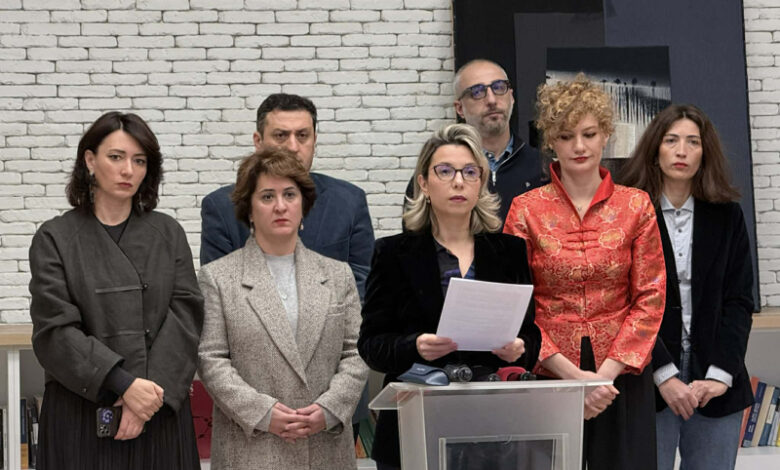
“We have called on the OPCW director-general to exercise his mandate and consider the possibility of dispatching a fact-finding or investigative mission to Georgia,” said Nino Lomjaria, director of Georgia’s European Orbit, as she read out the joint statement on December 22.
“In parallel, we have addressed United Nations special rapporteurs and the Council of Europe’s commissioner for human rights to ensure a response within their respective mandates, provide international oversight and contribute to establishing the truth in order to protect the rights of those affected,” she added.
Lomjaria said the appeal was aimed “not only to investigate possible grave violations committed in the past, but also to prevent future violence and uphold the fundamental principles of international law in Georgia,” adding that those affected have the right to be fully informed about what chemical compounds were used against them during the dispersals.
The statement comes weeks after BBC Eye published an investigation alleging the use of “WWI-era” toxic substance camite against Georgian protesters during last year’s pro-EU protests.
The findings echoed longstanding concerns raised by protesters, human rights groups and medical professionals, many of whom have reported long-term health complications following exposure during rallies.
The ruling Georgian Dream party denied the allegations and threatened to sue the BBC. The officials, however, confirmed a substance, but not camite, was mixed in the water cannons. On December 6, the State Security Service of Georgia said it completed the investigation, concluding the substance used by police against protesters over the years, including during dispersals on December 4-5, was CS gas and said authorities had “never purchased camite.” The agency, however, didn’t specify whether they used any substance on other days of dispersals.
The CSOs dismissed the explanation. “The State Security Service’s so-called five-day investigation and the ‘conclusion’ it presented raised questions and suspicions instead of providing answers,” the December 22 statement said, adding that it “once again demonstrated that there is no effective, independent or credible investigative mechanism in Georgia.”
Calls for an independent international investigation into the alleged use of toxic chemicals have persisted over the past weeks in Georgia. Concerns were also raised by Michael O’Flaherty, CoE Human Rights Commissioner, who said in a December 10 letter to Prosecutor General Giorgi Gvarakidze that while he had been assured during a January visit that police did not deploy water cannons containing chemical irritants, “several officials … have acknowledged that chemical substances were mixed into the water.”
The signatories of the joint statement include Sapari; Georgian Young Lawyers’ Association (GYLA); Georgian European Orbit; Prevention for Progress (PFP); Georgian Center for Psychosocial and Medical Rehabilitation of Torture Victims (GCRT); Democracy Defenders; Civil Society Foundation (CSF); Social Justice Center; Academy of Georgia’s Future; International Society for Fair Elections and Democracy (ISFED); Transparency International Georgia; Economic Policy Research Center.
Also Read:
- 03/12/2025 – Georgian State Security Service Summons Those Featured in BBC Report
- 02/12/2025 – Georgian Authorities Deny Use of Camite After BBC Investigation
- 03/12/2024 – Watchdog Details “Inhuman and Degrading Treatment” Against Protesters by Police
- 21/10/2024 – MIA Admits to Mixing Tear Gas in Water Canons During Protests Against Agents’ Law
This post is also available in: ქართული