
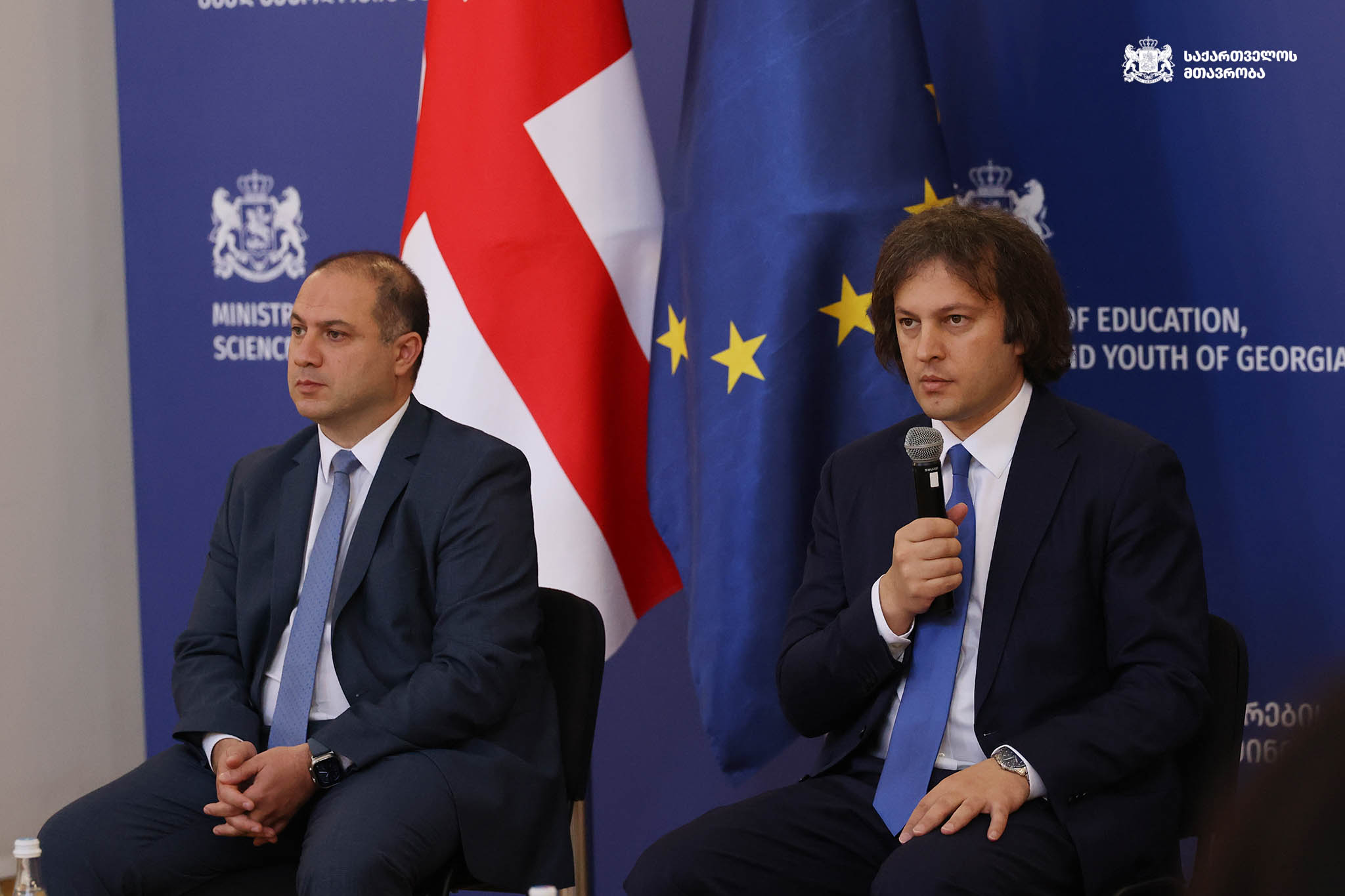
An international group of 65 academics engaged in Georgia’s higher education has called on Georgian Dream Prime Minister Irakli Kobakhidze to “rethink” the government’s proposed National Reform Concept for Higher Education, warning that it risks closing “the last sphere in Georgia which is open to healthy dissent.”
In a document dated December 15, scholars from universities around the world addressed the GD government’s recently unveiled reform initiative, which authorities say is intended to improve the efficiency and quality of the higher education system and promote equal access for students. They urged the Georgian Dream government to “rethink this educationally harmful proposal” and to engage with all stakeholders in the higher education sector to develop “a genuine reform that will improve the lives of Georgian citizens and those of their children.”
Challenges unmet, control strengthened
The academics say Georgia’s education sector faces deep-rooted challenges, including under-resourced universities, underpaid faculty forced to work two or three jobs to support their families, the disappearance of government-funded research and scientific laboratories, and graduate unemployment that “stimulates a massive out-migration abroad every year.”
“The measures you propose in the National Reform Concept for Higher Education will not solve any of these problems,” the scholars wrote. “Rather, they will increase government control over the higher educational sector.”
The scholars say the reform would weaken university autonomy and concentrate authority in leadership “beholden to the government.” “University autonomy, and with it, faculty control over academic programs and curricula will be severely weakened,” they argue, “University budgets will be reduced even further, and the removal of dissenting faculty will become easier as part of the reorganization. “
The scholars also said they were alarmed by the repressive tools used by the current government, citing the imprisonment of faculty and students for peaceful protest.
“Your proposed National Reform Concept for Higher Education will not only nullify Georgia’s democratic progress but will limit the prospects of your citizens, who you were elected to represent,” they wrote.
The academics stressed that academic freedom is essential to Georgia’s long-term development.
“A well-functioning university system which incorporates critical thinking, self-government, academic freedom, well-funded research opportunities, and international exchange is vital to growing the Georgian national economy,” the document says. “Without universities where information is freely shared, and research freely pursued, the Georgian economy will not thrive.”
Controversial reform
Kobakhidze announced the long-anticipated university reform concept on October 16, triggering concern among critics about potential purges in state universities and the risk that the new system could undermine international study opportunities for Georgian students.
The GD plans include decentralizing higher education away from the capital, introducing a “one city – one faculty” principle, meaning that a single faculty can be taught at only one state university per city through a process described as “reorganization.” The proposals also envision reducing general schooling from 12 years to 11, and replacing the current 4+2 bachelor’s and master’s degree structure with a 3+1+1 model.
Also Read:
- 08/12/2025 – Education for ‘Free’ or Academic ‘Catastrophe’ – Controversial Reforms Reach Universities
- 17/10/2025 – Georgian Technical University Rector Seeks Seizure of University of Georgia Property
- 10/03/2025 – University Suspends Protesting Students, Watchdog Speaks Out About GD’s Suppression of Student Protest
- 20/11/2024 – TSU Allegedly Allowed Police to Use its Grounds for Crackdown, Sparking Outrage
This post is also available in: ქართული