
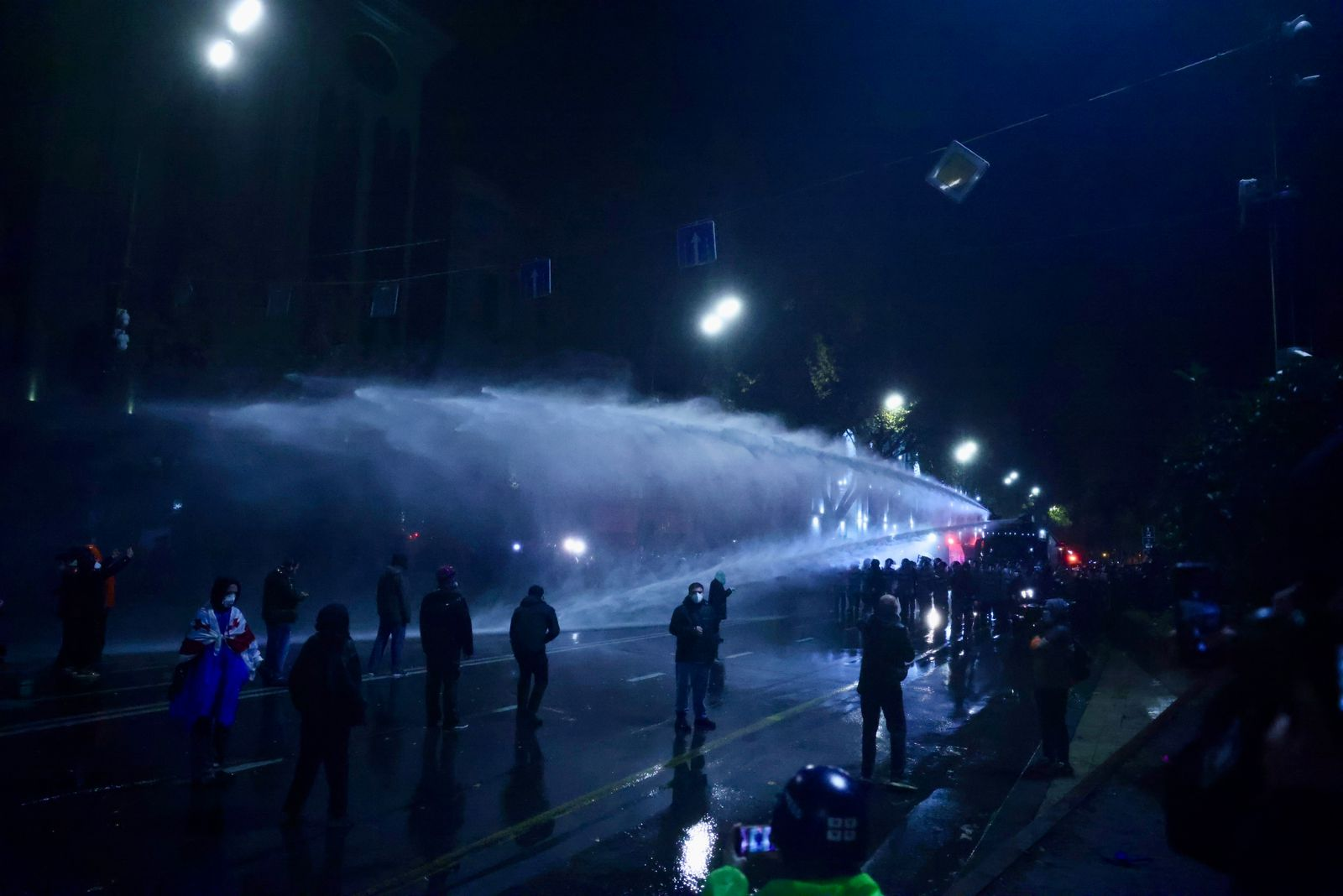
The State Security Service of Georgia has summoned individuals featured in, or whose work was used in, a BBC investigative documentary that alleged Georgian authorities may have used a military-grade chemical compound known as camite to disperse protests in 2024.
The summonses follow an SSSG investigation into alleged “abuse of official powers” and possible “assistance to foreign entities.” Human Rights groups and critics say the agency appears less focused on establishing the facts than on pressuring those who spoke about or helped expose alleged human rights violations.
Those summoned include pediatrician brothers Constantine and Davit Chakhunashvili; their father, Giorgi Chakhunashvili; Eka Gigauri, head of Transparency International Georgia; members of the Georgian Young Lawyers Association; and citizen Zviad Maisashvili, who was severely beaten by riot police last year. All were either featured in the BBC documentary or had their work cited in the investigation, which the ruling party has dismissed as “absurd” and “a lie.”
“Instead of providing a clear and convincing answer about the chemical agents used to disperse peaceful demonstrations in November–December 2024, the State Security Service of Georgia is summoning the very individuals and organizations that defend human rights for questioning,” TI-Georgia and GYLA said in separate statements. Both organizations said that Eka Gigauri and GYLA members chose to testify before a magistrate judge.
The summoning raises strong suspicions that the authorities’ aim is “not to establish the truth,” but to pressure human rights groups and those who speak out about systemic violations, the organizations added. In the cases of Gigauri and GYLA members, they had spoken with the BBC about human rights abuses during protests and their dispersal.
Among those summoned were Constantine Chakhunashvili, who appeared in the documentary, his brother Davit Chakhunashvili, and their father, Giorgi Chakhunashvili. While only Constantine was interviewed for the film, all three were summoned over their co-authorship of a study examining the health effects of tear gas used during peaceful protests, which was cited in the BBC investigation. Their study, however, did not allege the use of camite. Another co-author, Gela Ghunashvili, was also called in.
The BBC investigation, however, relied not only on the study, but also on chemical weapons experts and whistleblowers from Georgia’s riot police and medical community in suggesting that camite, chemically known as bromobenzyl cyanide, may have been deployed during the first days of pro-EU demonstrations that began on November 28, 2024. The compound was used by France against Germany during World War I and was phased out by 1930 due to health concerns.
The report followed long-standing concerns raised by Georgian professionals and CSOs about the use of unidentified chemical compounds during the dispersal of the November–December 2024 protests in Tbilisi. Police used tear gas, pepper spray, and water cannons against protesters, with some reporting long-term effects afterward, including headaches, fatigue, coughing, shortness of breath and vomiting.
The SSSG also summoned Zviad Maisashvili, who appeared in the BBC documentary after being severely assaulted by riot police on the night of November 30, 2024.
Tata Khundadze, an activist of the Droa party, who recently posted a photo on Facebook showing facial injuries she said were caused by crowd-control measures used during the protests, was also summoned.
“When you assist a specific organization in spreading false information harmful to the state, this can be considered a criminal offense,” Georgian Dream Prime Minister Irakli Kobakhidze told journalists on December 2.
Also Read:
- 02/12/2025 – Georgian Authorities Deny Use of Camite After BBC Investigation
- 02/05/2025 – GYLA Slams Authorities for Concealing Composition of Chemical Agents Used During Protest Dispersals
- 21/10/2024 – MIA Admits to Mixing Tear Gas in Water Canons During Protests Against Agents’ Law
This post is also available in: ქართული