
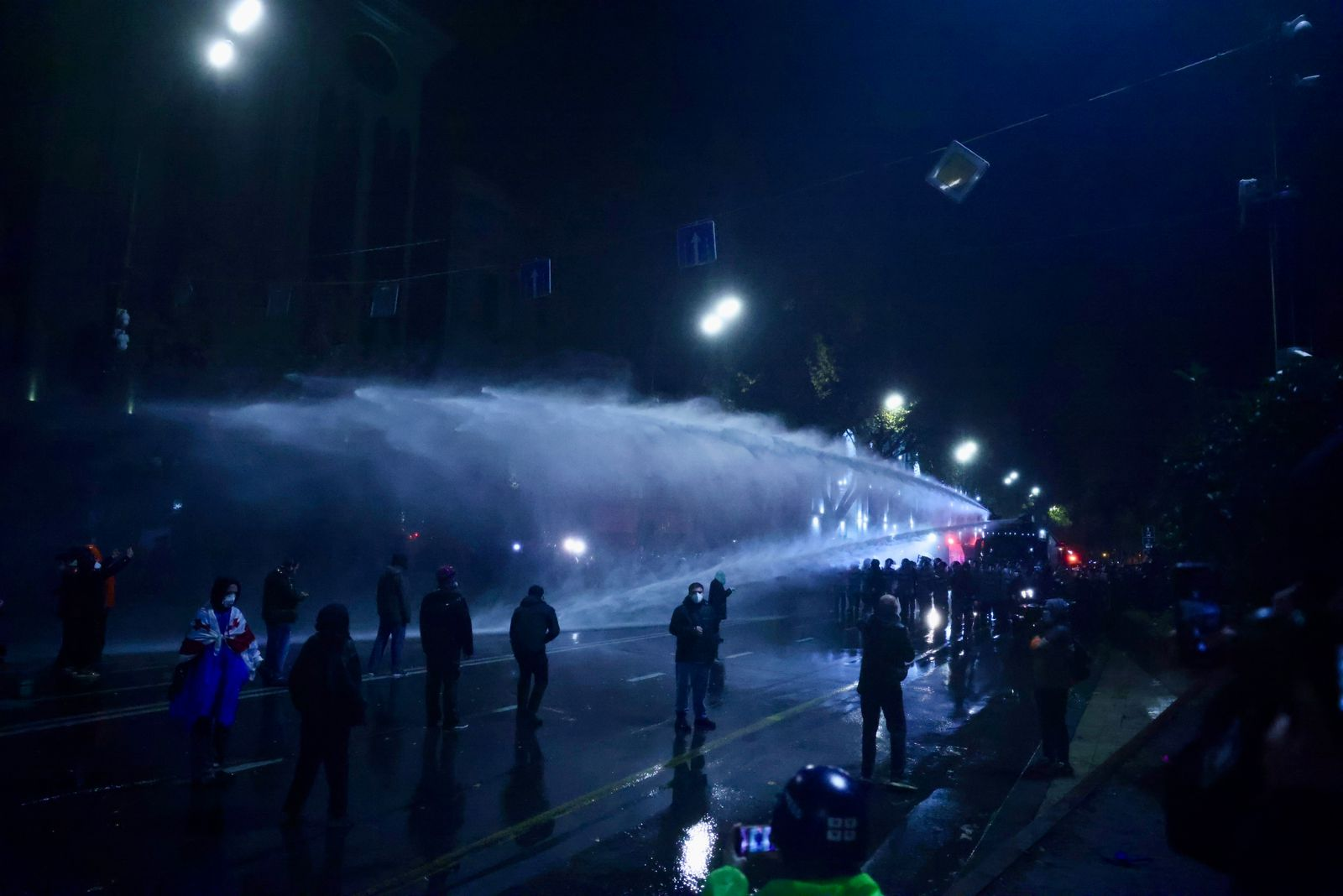
The State Security Service of Georgia (SSSG) has launched an investigation into possible exceeding of official powers and potential assistance to foreign entities, following the BBC’s report suggesting that Georgian police may have used a World War I–era military toxic compound against protesters last year.
The SSSG said the investigation aims to clarify “what information the interviews used by the BBC relied on, what claims were made by the individuals interviewed, and how relevant this information may be.”
“On the one hand, the published material contains signs of a crime which, if confirmed, is directed against the life and health of citizens and substantially violates their and the public’s lawful interests,” the SSSG stated in its December 1 statement, made hours after the publication of the BBC’s investigative report. “On the other hand, it contains signs of a crime that severely harms Georgia’s national interests, its international image and reputation, and is directed against the interests of the state.”
The investigation is underway under Article 333, which pertains to exceeding official power, and Article 317, which covers providing assistance to a foreign country, foreign organization, or an organization controlled by a foreign state in hostile activities.
Citing chemical weapons experts, whistleblowers from Georgia’s riot police, and medical professionals, a December 1 BBC World Service investigative report suggested that an agent known as camite, a World War I–era compound, may have been used during the first days of the pro-EU, anti-government demonstrations that began on November 28, 2024.
The report followed longstanding concerns from Georgian professional and civil society groups about the use of unidentified chemical compounds during dispersals of November-December 2024 protests. Georgian police used tear gas, pepper sprays, and water cannons against the demonstrators, with a part of protesters reporting long-term side effects afterward.
The ruling Georgian Dream party has rejected the allegations and announced plans to sue the broadcaster in an international court. Criticising the report, the ruling party and the affiliated media heavily seized on a recent controversy surrounding the BBC’s coverage of Donald Trump’s comments, which led to the resignation of the broadcaster’s director general and the news CEO.
“Clearly, the so-called media that has turned into a propaganda arm of Deep State [a conspiracy theory about informal rule in the West] has not presented a single fact to support the accusations,” Georgian Dream said in its statement, arguing that the article relies on the accounts of “interested persons” and has “nothing to do with the reality.”
Also Read:
- 03/12/2024 – Watchdog Details “Inhuman and Degrading Treatment” Against Protesters by Police
- 02/12/2024 – Public Defender: “Alarming” 80% of Detainees Report Mistreatment, Violence by Police
- 29/11/2024 – GYLA: Dispersal Unlawful, Inhumane and Involves Disproportionate Force
- 21/10/2024 – MIA Admits to Mixing Tear Gas in Water Canons During Protests Against Agents’ Law
This post is also available in: ქართული