
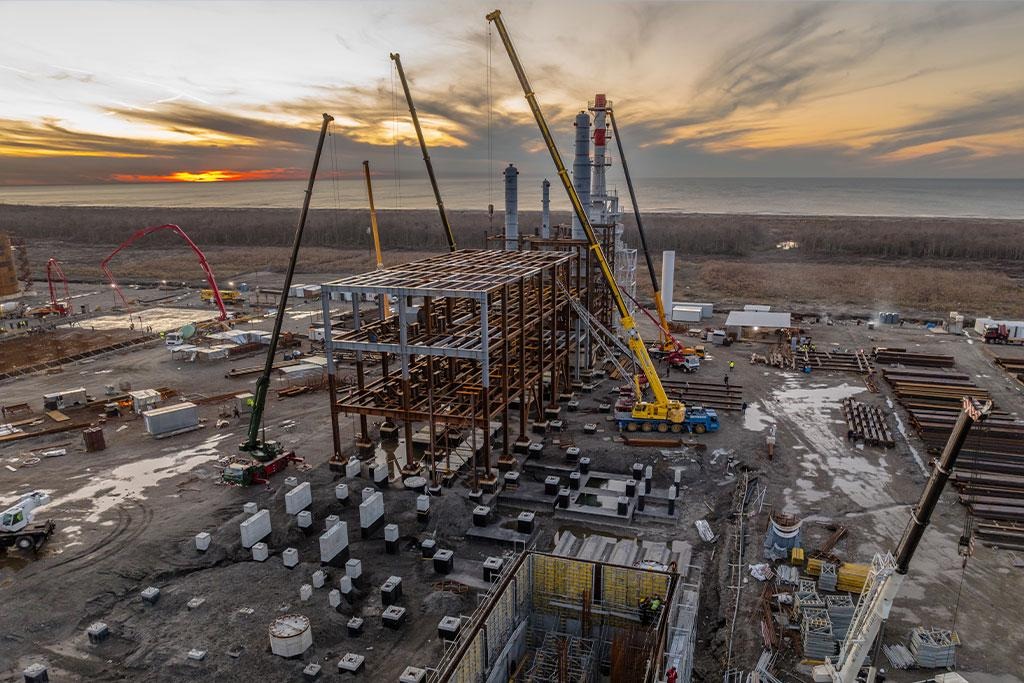
Transparency International (TI) Georgia, a local corruption watchdog, argued in its recent report that the Kulevi oil refinery on the Black Sea Coast may create conditions for Russian oil to be re-exported as a Georgian product, noting the West may see it as a sanctions evasion scheme for Moscow.
The USD 700 million refinery, promoted by the Georgian Dream government as one of the most important projects for the country’s energy security and independence, attracted spotlight and scrutiny following a Reuters report that it received its first shipment of Russian oil in October.
The October 21 report said that the cargo consisted of 105,340 metric tons of Siberian Light crude delivered by the tanker Kayseri from Russia’s Novorossiisk port on October 6. The shipment was supplied by Rusneft, a Russian oil company that TI-Georgia says may still be effectively controlled by its founder, oligarch Mikhail Gutseriev, who has faced Belarus-related sanctions in the West.
Following Reuters’ report, Georgia’s Revenue Service stated that neither the vessel, its owners, nor the consignor or consignee was under international sanctions. It said the cargo had been placed in a temporary customs warehouse for control procedures.
However, TI Georgia notes that three weeks after the shipment, on October 24, the Kayseri was added to the EU’s sanctions list targeting Russia’s “shadow fleet” of tankers facilitating the sale of Russian oil.
Owners and Russia Links
The TI report focused on the owners of the refinery and their possible Russia links.
According to the report, Black Sea Petroleum LLC, which operates the refinery, has undergone ownership changes: until December 2024, the company was 70% owned by Maka Asatiani, a Georgian business figure, and 30% by Trade Stone Iberia LLC, whose majority owner was also Asatiani.
On December 3, 2024, Asatiani’s company, MK Capital LLC, became the sole owner, the report says, while in February 2025, Dunamis LLC, owned by David Potskhveria, acquired 29.34% of Black Sea Petroleum after, according to TI-Georgia, contributing 911 million rubles (about GEL 28.4 million) to the company’s capital, bringing the total to GEL 96.8 million. Potskhveria has since also taken over as the company’s CEO.
The Supervisory Board includes former Economy Minister Levan Davitashvili, who was removed from his post in June 2024, as well as Vakhtang Chakhnashvili and Konstantine Gogelia, Asatiani’s husband.
Citing Business Research Group, a Georgian platform, TI-Georgia notes that Gogelia has long-standing business operations in Russia and is the founder of Nefteresurs and Arctic Bunker, with his companies operating terminals in Murmansk and Novorossiisk and involved in wholesale trade and transportation of solid, liquid, and gaseous fuels and similar products.
The watchdog also cites an investigation by the Russian outlet Agency (Агентство), which, drawing on journalistic investigation, reported that Asatiani’s son, Kakhi Zhordania, active in Russia’s oil sector, has business ties to Sergei Alekseev, son of Vladimir Alekseev, First Deputy Chief of the Main Directorate (GRU) of the General Staff of the Russian Armed Forces.
According to the report, since 2018, Zhordania has held a 25% stake in Russian company SDO-Logistic, where Alekeev has a 51% stake. The article also says Alekseev previously worked at Rusneft before moving into private business.
Questions Over Possible Sanctions Evasion
TI-Georgia references earlier reporting by investigative outlet iFact, which suggested that Russian fuel may be reaching Europe via Georgia, including pointing to a mismatch between the Georgian official oil export-import data with the data provided by other international authoritative databases.
TI-Georgia further cites an investigative piece by government-critical Formula TV, which claimed to have obtained a confidential U.S. government report – pointing to the U.S. Department of State as a source – warning of sanctions-evasion risks related to building the Kulevi refinery. Formula further said the “confidential document” identified Konstantine Gogelia as a Russian businessman with close ties to Russian military services and alleges that a company owned by his family has altered certificates of origin for Russian oil.
“Ultimately, the Kulevi oil refinery increases the likelihood of real or fictitious processing of Russian oil in Georgia and its export as a Georgian product. Western countries may see this as a scheme to circumvent oil-related sanctions imposed by them on Russia,” TI-Georgia concluded.
Also Read: